


450W vs 550W vs 620W Solar Panels: Which Is Best for Your Solar System?
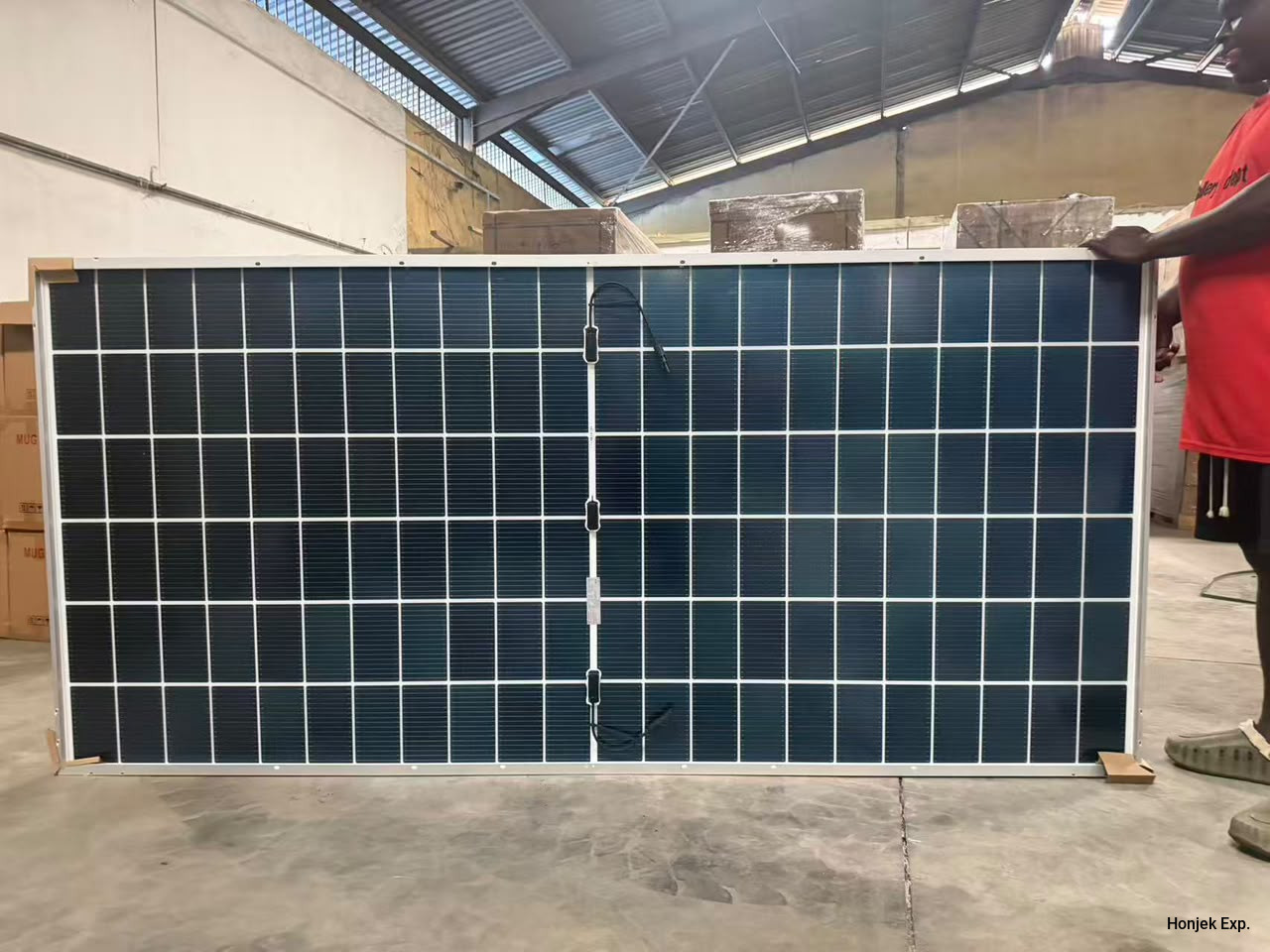
450W vs 550W vs 620W Solar Panels: Which Is Best for Your Solar System?
By Honjek Technical Limited | HonjekExpress Marketplace
Introduction
Choosing the right solar panel is not simply about buying the panel with the highest wattage.
When comparing 450W vs 550W vs 620W solar panels, buyers often assume that a 620W panel is automatically better than a 550W or 450W panel. In reality, the best choice depends on your available roof space, inverter specifications, battery capacity, energy consumption, installation design, panel efficiency, budget and long-term expansion plans.
A higher-wattage panel produces more rated power per module, but it may also have different physical dimensions, voltage characteristics, current ratings and compatibility requirements.
This guide explains the practical differences between 450W, 550W and 620W solar panels and helps homeowners, businesses and solar installers select the right panel for a solar power system.
Quick Comparison: 450W vs 550W vs 620W Solar Panels
Feature| 450W Panel| 550W Panel| 620W Panel
Rated power| 450 watts| 550 watts| 620 watts
10 panels total| 4.5 kWp| 5.5 kWp| 6.2 kWp
Panels needed for 5 kWp| About 12| About 10| About 9
Roof space required| More panels| Moderate| Fewer panels
Individual panel size| Often smaller| Larger| Often larger
Handling and installation| Easier| Moderate| Heavier/larger
Best for| Homes and limited systems| Residential and commercial| Large roofs and high-capacity systems
«Important: Actual dimensions, voltage, current and efficiency vary by manufacturer and panel model. Always use the specific module datasheet for final solar system design.»
What Does Solar Panel Wattage Mean?
Solar panel wattage refers to the module's rated maximum power output under Standard Test Conditions (STC).
The basic relationship is:
Power = Voltage × Current
or:
P = V × I
A 550W panel, for example, may operate around a particular combination of voltage and current that produces approximately 550 watts under STC.
However, actual field output can vary because of:
- Solar irradiance
- Panel temperature
- Dust and dirt
- Shading
- Cable losses
- Panel orientation
- Tilt angle
- System losses
- MPPT performance
Therefore, a 550W panel will not continuously produce exactly 550 watts throughout the day.
450W Solar Panels: Advantages and Applications
A 450W solar panel remains a practical option for many residential and small commercial solar systems.
Advantages of 450W panels
- Suitable for smaller roof structures.
- Easier to handle during installation.
- Can be practical where physical panel size is important.
- Suitable for residential solar systems.
- Useful for replacement or expansion of existing arrays using compatible modules.
Example
Ten 450W panels provide:
10 × 450W = 4,500W
or:
4.5 kWp
To build approximately 5 kWp:
5,000 ÷ 450 ≈ 11.1 panels
Therefore, approximately 12 × 450W panels would provide:
5.4 kWp
depending on inverter design and DC oversizing strategy.
Best suited for:
- Small homes
- Limited electrical loads
- Rooftop installations
- Compact PV systems
- Systems where module dimensions are important
550W Solar Panels: The Balanced Option
The 550W solar panel is widely used for residential and commercial solar installations because it offers a strong balance between panel quantity, total power and installation practicality.
Advantages of 550W panels
- Higher power per panel than 450W modules.
- Fewer panels needed for the same PV capacity.
- Suitable for many residential and commercial systems.
- Can reduce the number of mounting positions and inter-panel connections.
- Useful for 5 kW, 10 kW and larger solar installations.
Example
Ten 550W panels provide:
10 × 550W = 5,500W
or:
5.5 kWp
For a 10 kWp solar array:
10,000 ÷ 550 ≈ 18.18 panels
Therefore, approximately:
19 × 550W panels
would theoretically provide 10.45 kWp.
In practice, the final panel quantity must be determined by the inverter's MPPT voltage range, maximum PV voltage, maximum input current and allowable PV oversizing.
Best suited for:
- Medium to large homes
- Small businesses
- Shops and offices
- Commercial solar installations
- Hybrid inverter systems
620W Solar Panels: High Power Per Module
A 620W solar panel provides more rated power per individual module.
This means fewer panels may be required to achieve a target PV capacity.
Example
To achieve approximately 5 kWp:
5,000 ÷ 620 ≈ 8.06 panels
Therefore:
9 × 620W panels = 5,580W
For approximately 10 kWp:
10,000 ÷ 620 ≈ 16.13 panels
Therefore:
17 × 620W panels = 10,540W
Advantages of 620W panels
- More power per module.
- Fewer panels for the same total PV capacity.
- Potentially fewer inter-panel connections.
- Useful for high-capacity systems.
- Can be advantageous where installation area is limited but structural design supports the module.
Considerations
Higher-wattage panels are often physically larger and heavier. This means installers must consider:
- Roof structure
- Mounting rail capacity
- Wind loading
- Handling during installation
- Module dimensions
- Transportation
- MPPT current limits
Best suited for:
- Commercial installations
- Large residential systems
- Large rooftops
- Ground-mounted systems
- Projects requiring high PV capacity
How Many Panels Do You Need?
The number of panels depends on the required PV capacity.
For approximately 5 kWp
450W panels
5,000 ÷ 450 = 11.11
Approximately:
12 panels = 5.4 kWp
550W panels
5,000 ÷ 550 = 9.09
Approximately:
10 panels = 5.5 kWp
620W panels
5,000 ÷ 620 = 8.06
Approximately:
9 panels = 5.58 kWp
For approximately 10 kWp
450W panels
Approximately:
23 panels = 10.35 kWp
550W panels
Approximately:
19 panels = 10.45 kWp
620W panels
Approximately:
17 panels = 10.54 kWp
The exact design may use more or fewer panels depending on the inverter's PV input limits.
Does a 620W Panel Produce More Energy Than a 550W Panel?
Under identical test conditions, a 620W panel has a higher rated maximum power output than a 550W panel.
The difference is:
620W − 550W = 70W
Percentage difference:
70 ÷ 550 × 100 ≈ 12.7%
Therefore, one 620W panel has approximately 12.7% more rated power than one 550W panel.
However, this does not mean that replacing one 550W panel with one 620W panel automatically increases an entire solar system's production by 12.7%.
Actual energy generation depends on:
- Number of panels
- Panel orientation
- Shading
- Temperature
- Inverter limitations
- MPPT configuration
- System losses
- Available sunlight
450W vs 550W: Which Is Better?
A 550W panel provides:
550 − 450 = 100W
more rated power per panel.
That is approximately:
100 ÷ 450 × 100 ≈ 22.2%
more rated power per module.
Therefore, for the same target system size, fewer 550W panels are generally required.
For example:
- 12 × 450W = 5.4 kWp
- 10 × 550W = 5.5 kWp
The 550W configuration uses fewer modules while delivering slightly more total rated PV power.
However, the 450W panel may be physically easier to install and may fit certain roof layouts better.
550W vs 620W: Which Is Better?
A 620W panel provides:
620 − 550 = 70W
more rated power per panel.
For the same target PV capacity, fewer 620W modules may be required.
Example:
Approximately 10 kWp:
- 19 × 550W = 10.45 kWp
- 17 × 620W = 10.54 kWp
The 620W option uses two fewer panels.
However, the best option still depends on:
- Roof dimensions
- Panel dimensions
- Weight
- Mounting structure
- Inverter specifications
- Price per watt
- Availability
- Transportation
- Future maintenance
Panel Wattage Is Not the Same as Panel Efficiency
A common mistake is to assume:
«Higher wattage always means higher efficiency.»
This is not necessarily correct.
A panel can have a higher wattage simply because it has a larger physical surface area.
For example:
- A 450W panel may be smaller.
- A 620W panel may be physically larger.
Solar panel efficiency is the percentage of sunlight converted into electrical energy.
Therefore, compare:
Efficiency + physical size + power output + electrical specifications
rather than wattage alone.
MPPT Compatibility: A Critical Factor
Before installing 450W, 550W or 620W solar panels, check the inverter specifications.
Important parameters include:
Maximum PV voltage
The total temperature-corrected string Voc must remain below this value.
MPPT voltage range
The operating Vmp of the solar string must remain within the MPPT operating range.
Maximum PV input current
The panel or parallel string current must not exceed the inverter's limits.
Maximum PV power
The total installed PV capacity must be within the inverter manufacturer's recommended limits.
For example, a high-wattage 620W panel may have a different current rating from a 450W panel.
Therefore:
«Never select solar panels based only on wattage.»
Always check the panel datasheet against the inverter datasheet.
Example: Why Current Matters
Suppose a particular solar inverter has a maximum PV input current of:
15A per MPPT
A solar panel with:
Imp = 13A
may be acceptable.
But connecting two identical strings in parallel could theoretically increase operating current to approximately:
26A
which may exceed the MPPT input current limit.
This is why panel configuration must consider:
Series voltage + parallel current + inverter limits.
Roof Space Comparison
For the same solar capacity, higher-wattage panels generally reduce the number of modules required.
For approximately 10 kWp:
Panel Wattage| Approximate Number of Panels
450W| 23
550W| 19
620W| 17
This can reduce:
- Number of mounting clamps
- Number of inter-panel connections
- Installation time
However, fewer larger panels do not automatically mean less roof area because module dimensions and efficiency differ between manufacturers.
Always compare the actual dimensions in metres or square metres.
Which Panel Is Best for a Nigerian Solar System?
For solar installations in Nigeria, the correct choice depends primarily on the project.
Choose 450W panels when:
- You have a smaller roof.
- The existing system was designed around similar modules.
- Panel handling and layout are important.
- The system has modest PV requirements.
Choose 550W panels when:
- You need a balanced solution.
- You are installing a medium to large residential system.
- You want fewer modules than a 450W design.
- The inverter's electrical specifications are compatible.
Choose 620W panels when:
- You require high power per module.
- The installation structure supports larger modules.
- You are building a commercial or high-capacity system.
- You want to reduce the number of modules required.
- The inverter MPPT current and voltage specifications are compatible.
Common Mistakes When Buying High-Wattage Solar Panels
1. Buying based on wattage only
Check the complete datasheet.
2. Ignoring panel dimensions
A larger module may not fit the roof layout.
3. Ignoring inverter current limits
Higher-current modules may not be compatible with every inverter.
4. Ignoring string voltage
Voc and Vmp determine the correct number of panels in series.
5. Ignoring temperature
Cold weather increases PV Voc, while high temperatures reduce operating voltage.
6. Buying without checking authenticity
Verify the manufacturer, serial numbers, warranty terms and product documentation.
7. Using weak mounting structures
Large solar modules require properly engineered mounting systems.
How to Compare Solar Panel Prices Correctly
Do not compare only the price per panel.
A 620W panel will usually cost more than a 450W panel, but it also provides more rated power.
A better comparison is:
Cost per watt = Panel price ÷ Panel wattage
Example:
If:
- 450W panel costs ₦X
- 550W panel costs ₦Y
- 620W panel costs ₦Z
calculate:
₦X ÷ 450
₦Y ÷ 550
₦Z ÷ 620
Then compare the cost per watt alongside:
- Warranty
- Efficiency
- Manufacturer reputation
- Module technology
- Mechanical strength
- Electrical specifications
- Availability
The cheapest panel is not always the lowest-cost solution over the life of the system.
Frequently Asked Questions
Is a 620W solar panel better than a 550W panel?
Not automatically. A 620W panel provides more rated power per module, but compatibility with the inverter, roof structure, physical dimensions and price per watt must be considered.
How many 550W solar panels make 5kW?
Approximately 10 panels provide:
10 × 550W = 5.5 kWp
The exact configuration depends on inverter specifications.
How many 620W panels make 5kW?
Approximately 9 panels provide:
9 × 620W = 5.58 kWp
How many 450W panels make 5kW?
Approximately 12 panels provide:
12 × 450W = 5.4 kWp
Can I mix 450W and 550W solar panels?
Mixing panels is possible in certain engineered configurations, but panels with different electrical characteristics should not be casually mixed on the same string or MPPT.
Which solar panel wattage is best for a home?
For many medium-to-large homes, 550W panels can provide a practical balance. However, the correct choice depends on roof space, load requirements and inverter compatibility.
Final Verdict: 450W vs 550W vs 620W
There is no universal winner.
450W
A practical choice for smaller systems and installations where module size and layout flexibility are important.
550W
Often provides an excellent balance between power output, panel quantity and installation practicality.
620W
Provides high power per module and can reduce the number of panels required for large-capacity installations.
The best decision should be based on a complete solar design.
Do not choose a panel only because it has a higher wattage.
A proper solar engineer should evaluate:
Load demand + daily energy consumption + roof space + inverter MPPT range + maximum PV voltage + PV current + battery capacity + panel dimensions + shading + cable distance + budget.
At Honjek Technical Limited, we provide professional solar load assessment, PV system design, solar panel sizing, inverter selection, installation, commissioning and maintenance.
For genuine solar panels, hybrid inverters, lithium batteries, solar cables, protection devices and complete solar solutions, visit the HonjekExpress Marketplace.
- Solar Panel Wiring
- Series vs Parallel Solar Panels
- MPPT Voltage Calculation
- Solar Cable Sizing
- How to Size a Solar Inverter
- How to Calculate Solar Load
- Lithium Battery Buying Guide
- Complete Solar System Installation Guide
- 450W solar panels
- 550W solar panels
- 620W solar panels
- Hybrid solar inverters
- Lithium batteries
- Solar mounting structures
- PV cables
- DC breakers and surge protectors
- Complete solar power systems
Recent Posts

Honjek Technical Limited: Professional Solar Installation Company in Rivers State
Professional Solar Installation Company in Nigeria: What to Look For Before Choosing an Installer
Solar Maintenance: How to Keep Your Solar System Efficient, Reliable, and Long-Lasting
450W vs 550W vs 620W Solar Panels: Which Is Best for Your Solar System?
Solar Panel Wiring: Complete Guide to Solar PV Connections, Cable Sizing and Protection
Powering Innovation, Delivering Value.
Shop smart with Honjek Express Marketplace — your one-stop destination for quality electrical, solar, CCTV, and everyday products at competitive prices. Trusted service, verified products, and fast delivery you can rely on.

About Honjek Express
Welcome to Honjek Express — a fast-growing Nigerian online marketplace built to connect customers with quality technical products, engineering solutions, and reliable procurement services. Operated by HONJEK TECHNICAL LIMITED, Honjek Express combines technology, engineering expertise, and digital commerce to simplify access to solar energy products, electrical materials, CCTV security systems, industrial tools, technical books, and modern engineering solutions.
At Honjek Express, we focus on delivering trusted products, professional support, and value-driven services for individuals, businesses, contractors, institutions, and industries across Nigeria and beyond. Our platform is designed to bridge the gap between quality engineering products and customers seeking reliable, affordable, and durable solutions.
With years of practical experience in electrical installation, solar power systems, CCTV surveillance, industrial maintenance, and procurement services, our team understands the technical demands of modern projects. This enables us to recommend suitable products and solutions that meet real operational needs.
Our Core Services
Solar system products and accessories
Inverters, lithium batteries, and solar panels
CCTV cameras and security surveillance systems
Electrical installation materials and industrial components
Engineering procurement services
Technical books and educational materials
Professional technical consultation and support
Why Choose Honjek Express?
Quality and verified products
Technical engineering expertise
Competitive pricing
Reliable customer support
Fast response and delivery process
Commitment to innovation and customer satisfaction
Our mission is to promote modern engineering awareness, improve access to clean energy and security technology, and support businesses and homes with dependable technical solutions.
At Honjek Express, we do not just sell products — we provide practical engineering solutions that power businesses, secure properties, and improve lives.
Visit Honjek Express to explore our products and services.